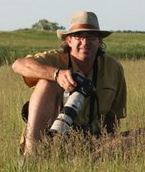
Phoebe and I made a bunch of appearances at middle schools in north Brevard County near Titusville as part of the Space Coast Birding & Wildlife Festival. We were trying to encourage some of the students—all near Phoebe's age—to consider birding as a fun, cool thing to do. We gave a half-dozen talks and lead a half-dozen walks. And I believe we made a few new birders.
The talks all went really well (I am so proud of the Phoebster for taking to public speaking so easily) and so did most of the walks. After all, it's hard not to see lots of birds in January in Florida. But it happens...
One of the schools we visited had a fairly bad bird walk due to an almost complete lack of birds. Oh sure we had some distant pepper specks int he sky (vultures) and some flyover American robins plus a few returning purple martins, but other than that we struck out. And I gotta tell you that I can keep any group of kids interested and under control as long as there are birds to show them. Preferably perched birds that we can get the spotting scope on. Even the rowdiest bully (of which we encountered none at the schools we visited) will go "Wow! That's AWEsome!" when shown a zoomed-in look at a northern mockingbird or any other species for that matter.
 We scanned in all directions. Not even a single mocker was present!
But at this school it was the doldrums of the afternoon with an approaching storm and the birds were all taking a siesta. Consequently the kids were becoming restless. After all it was Friday afternoon and this was their last class of the week. One group of boys began showing off by reenacting scenes from a war movie or video game. Girls began gathering into small groups to chat about the boys. Only a few students stuck with Phoebe and me, asking questions about birds, the book, us. The teacher began to tire of trying to keep control. I sensed my grip on the class slipping away.
That's when Mother Nature stepped in to save us. Someone screamed "AHHHH! SNAKE!!" and we watched as a tiny brown snake with a pale orange and black pattern on its back slithered into the middle of a group of 8th graders.
 I'm glad it was a small, calm snake. I would've hated to try to wrestle an excaped exotic boa constrictor.
We all got a look at the snake curled up inside the open tread of the sole. The "Cool!" and "Sweet!" and "Awesome" comments drifted through the sultry afternoon air.
 Phoebe was not so sure this was fun.
 Trying to coax the corn snake out of the shoe sole.
We strolled back to the school, retrieved the loaner binoculars (many heartfelt thanks for the bins to Eagle Optics and The Enchanted Forest), answered a few final questions, and said our goodbyes. Phoebe and I signed a copy of "The Young Birder's Guide" for the school's library, and hit the road. I'll bet that book gets checked out a few times this spring.
We'd seen fewer than five bird species on this bird walk, but, thanks to a snake in the grass, it was still a big success.