Thursday, September 10, 2009

Two Upcoming Birding Events

Thursday, September 10, 2009
2 comments
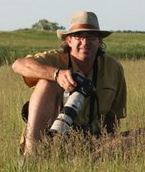
In the tower during The Big Sit!

There are two birding events I'm really looking forward to this fall.


The first is next week's Midwest Birding Symposium held in Lakeside, Ohio. Bird Watcher's Digest is one of the hosts (with the Ohio Ornithological Society and the Lakeside Association) for the event and we're expecting 800+ bird watchers there for a weekend of fun, birding, and bird-brain enhancement.

In a single 24-hour period it is feasible, at the Midwest Birding Symposium, to take a sunset boat cruise, watch a birding movie, catch fall warbler migration, hold an newly banded songbird, donate your old optics to a good cause, buy yourself some new binoculars, ride a Segway, book a tour to a world birding hotspot, enjoy an array of world-class speakers, get your favorite bird book signed by the author, learn about blogging, go digiscoping with a pro, enter a birding raffle, sponsor a bird on the conservation checklist, and meet several hundred new birding friends.

It's not too late to register, but you should not tarry. Get thee here for more details.

You can also call the MBS registration hotline: 800-879-2473. Or you can register at the MBS, which will be held September 17 to 20, at the Lakeside, Ohio that is on Lake Erie, near Port Clinton, Ohio.


Exactly one month from tonight I will be climbing the stairs of my birding tower to start the 2009 Big Sit. It goes from midnight to midnight on Sunday, October 11, 2009. The Big Sit has been called many things: Birding's most sedentary event; a tailgate part for bird watchers. What it really is is fun, exciting, and challenging. Basically the Big Sit involves staying put inside a 17-foot diameter circle in some birdy locale, and counting the species you can see or hear in a 24-hour period on the second Sunday in October. You can do your own Big Sit anywhere you like.

The concept has been around a long time, but was formalized (and trade-marked: it's officially called The Big Sit!) by the New Haven Bird Club in Connecticut. Bird Watcher's Digest hosts the Big Sit on our website and you can find details, including how to register your own Big Sit circle, by following this link.

I will be sitting again this year, the ninth Big Sit in our birding tower, along with 30 or so of my friends, birding and "normal," who will stop by throughout the day.

If you've never been to a birding festival, the Midwest Birding Symposium is a wonderful place to start.

If you like challenging your observation skills, and you like to sit around with your birding friends, try The Big Sit! You'll be glad you did!

Wednesday, September 9, 2009

The Church Owl

Wednesday, September 9, 2009
7 comments

Rosy wash of sunset leaving
trees back lit in silhouette
the village church tower like an owl
whose hunting has not started yet.

Tuesday, September 8, 2009

Birding at Cley

Tuesday, September 8, 2009
5 comments
The famous west wall at Cley, where many a vagrant was ticked and many a twitch ended in a dip.

On the Monday following the British Birdwatching Fair, David Tipling, my kind and generous host in Holt, took me birding at Cley, the famous bird watching hotspot in Norfolk. I'd known about Cley for years and had recently finished Mark Cocker's excellent book "Birders: Tales of a Tribe" which depicts Cley as the epicenter of the U.K. bird watching scene in the latter part of the 20th century. Though it is less of an epicenter now, Cley was legendary for its rare and vagrant birds, and for the legions of birders who congregated in the hides, homes, cafes, and pubs of this small coastal town.

Kestrel at Cley.

Out first stop was a pull off near the beach, some images of which I've already shared with you. On the way in, we had a close look at a European kestrel (which the Brits call, simply "kestrel"). I was sorry for the first (but not the last) time that I'd left my big rig Canon camera at home in Ohio. David, a world class bird and nature photographer had kindly left his gear at home, too. Today we were merely watching birds, not shooting them with cameras. I tried to convince myself that this felt liberating.

Salt House Pond just before the shrike.

After the kestrel and a look at some black-tailed godwits and a smattering of other waders, we drove back to the main road and stopped at a site known as Salt House Pond. We were hoping to find a little gull that had been seen here recently. On this day is was being seen elsewhere, not here. As we were turning to leave, I spotted a bird teed up on a nearby bush.

"Hey look! A shrike!" I said with a modicum of amusement. This caused David to spin around and glass the bird himself.
My shrike at a fair distance.

"That's a good bird, more than likely" he said. And it was. It turned out to be a juvenile red-backed shrike, likely a wanderer from The Netherlands across the North Sea from Cley. We never did get a great look at the bird, but enough to confirm its ID. Of course we got no photos—just my crumola images here.
My best shot, cropped and barely recognizable.

David reported the bird by cellphone to a local contact and minutes later the sighting rang through on his rare bird alert pager. Soon other birders were on the scene, sending in updates about the shrike's whereabouts. David commented that it was probably the best bird of the day along the Norfolk coast, which made me quite the happy lad.
Looking inland over Cley Marshes from the sea.


We spent the rest of the morning walking Cley's paths, down to the sea, along the shingle dunes, between the pools with strategically situated hides (what we call blinds). These hides are masterfully designed. The doors, floors, and benches do not squeak. The viewing slots have tension hinges that keep the slot doors from banging shut. And the bird watcher is rewarded, thanks to this ingenious design and forethought, with amazing view of waders and ducks and herons and gulls.

Entering a hide.


No shortage of viewing slots in the hide.


The view from one of the hides.


By mid-day I was hungry and I had my heart (and its precious aortic valves) set on fish and chips. David knew a place farther along the coast, so we jumped in his vehicle and zipped down the road. Arriving in a larger coastal town, we found the chip shop. It must be good, I thought, since a line of customers snaked out the door onto the sidewalk, waiting for service.

We eventually got to the order counter and were confronted by these fried choices:

Lunch was fish and chips, at my request.

I selected the cod and chips. David and I moved out of the chip shop queue (pronounced cue), and across the street to the quay (pronounced key) and ate our lunches while talking about the birds we'd seen at Cley (pronounced Kly).
It tasted far better than it looked. We ate on the seawall.

It was one heckuva day birding in one of the world's great, birdy places.

[BACK TO TOP]