Canary-winged parakeets were in the fruit trees at our hotel, Puerto Palmeras.
We got up early for a short birding excursion the next morning, but I had the first birds of the day even before I got out of bed. A tropical screech owl and a ferruginous pygmy-owl were both calling outside my room. I could hear them well because the upper half of the wall facing the courtyard was all screen--the temperature here being moderate all year 'round.
 This ferruginous pygmy-owl had the audacity to wake me up.
Our birding excursion was short and modestly birdy, but the overcast daylight made picking out colors difficult. We did manage to see black nunbird, a couple of distant trogons, magpie jays and the ubiquitous roadside hawks.
 There are birders from eight different countries in this photo of our morning birding outing near Tarapoto.
 Black nunbird.
Most of the day was spent attending the Peru Birdwatching Fair at the Puerto Palmeras Resort, hearing programs (including one from John O'Neill about the new Field Guide to the Birds of Peru), and speaking with ecotourism companies and lodge operators. Peru is trying, like Guatemala and Colombia, to overcome a reputation for political unrest and instability. It has a single, well-known destination: Machu Picchu, but has so much more to offer the cultural or ecotourist. I think you can tell from my long list of posts here on BOTB that I really enjoyed my trip to Peru. If they government keeps setting aside large tracts of habitat for parks and reserves, and if things continue to be stable politically, the number of natural history tours coming to Peru will certainly increase.
 The booths at the Birdwatching Fair were all outdoors.
My birding pals and I had planned to split as soon as things were concluded, to try to make it up higher into the cloud forest to see a very special bird: the Andean cock-of-the-rock. But the humid afternoon brought on a big thunderstorm, and it looked like night would fall before we could organize our expedition.
Then, all at once, the skies cleared and we saw our chance to make a mad dash up to the cloud forest 25 minutes away. We knew we'd be racing the remaining daylight, but the site for the bright orange cock-of-the-rock was reportedly a good one. The bird had been seen there late in the day just a week earlier. Steve made arrangements for a guide and a driver. We wanted to keep our group small so we could all fit in one vehicle and get moving quickly. Steve, Chris, Pete, the other Chris and I got into the resort's Land Rover with a driver and guide. It was 4:15 pm and the light was fading. If we did not make it up to the site before about 5:30, we'd have no light for birding.
Just as we got loaded and were about to leave, another participant of the event spotted us and invited himself along. This person had seen the bird on his portion of the week-long tour, so we explained that we really wanted to get going, we had no room in the vehicle, and it was a LIFE BIRD for all of us! He would not be denied, though. And our vehicle was forced to turn around at the gate to come back to pick him up. Not only him, but his non-birding wife, too. We muttered curses, but shifted and scooted and made just enough room. I straddled the gear shift, getting to know our driver more intimately than was truly necessary.
 Last light fading over the cloud forest.
The sun did not wait for us however, and as we made our way out of town and up slippery dirt roads, still flowing with the run-off from the afternoon rains, I tried to counsel myself that "it's about the journey, not the destination." If I did not see this spectacular bird, it would be OK.
Well that was a load of guano. If we missed the bird because Tommy Tagalong glommed onto us like a beggartick, I was going to have to say something to him. I was seriously worried that we'd been cock-of-the-rock blocked.
 Mototaxis are everywhere in Peru.
We drove for nearly 30 minutes until we were halted by a traffic stop. There were landslides ahead and no one could pass. Police were everywhere and we were flagged to the side of the road. Our driver made our case with the policeman (who was very well-armed). The policeman radioed to his superior. All the while we were losing light. My legs were numb from sitting on the metal bar between the front seats.
 Eventually this policeman let us pass up the mountain road.
 Evidence of the landslides that closed our road.
Finally we were permitted to go ahead. The crowd of people vehicles we left behind stared at us in disbelief. Some of them had been waiting for four hours.
On the way up the muddy road, we slipped sideways, even in four-wheel drive. We also dodged huge trucks and heavy equipment coming down. The road was only just opened. To the left the mountainside was almost vertical. To the right it dropped off several hundred feet. There was no guard rail.
Finally we got to the spot. A small hut indicated the trail head. This was a small park with a trail that climbed up along a rushing stream, leading into the dark cloud forest. Our guide indicated that, though it was not far to the place where the bird was, we must hurry to beat "la noche." We clambered out of the Land Rover and began climbing up the trail, which wound over mossy, wet rocks and was a bit treacherous in our haste. Up, up, up we went, the light diminishing as we got deeper into the forest.
Then all at once we were at the foot of a giant waterfall. The air was full of mist. The scene was so incredible--magical really--that we momentarily forgot to look for the bird. An orange flash caught my eye. OHMYGODTHEREITIS!
A male Andean cock-of-the-rock! Wow! Florescent orange head and shoulders, black underparts, weird comb of feathers on the head. He settled into a small crevice on the left side of the waterfall. We got him in the scope. Such a great bird. We high-fived and silently hooted and hollered.
Tommy Tagalong took this moment to begin bragging on all the other, better looks he'd had at this species. His wife began making noises about getting back to the resort. I briefly began looking for a spot to hide their bodies. There were a lot of good options.
We shut our ears and focused our minds, eyes, and optics on the bird, now probably settling in to roost for the night. For the next 15 minutes we just let the waterfall do the talking while we soaked in the view and the experience.
It was now almost too dark to see the path, so we headed down. We could not conceal the spring in our steps. An hour later we were off the mountain and back at Puerto Palmeras. Several rounds of celebratory cervezas were enjoyed, along with another of the ubiquitous pisco sours.
After all, it's not every day you get to see a bright orange life bird at the last possible few minutes of the day.
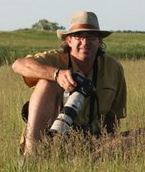
 BOTB at the COTR spot. Photo by Steve Rooke.
 My crummy COTR shot. I had a shot that was pretty dang good, but I accidentally deleted it from my camera! DOH!